Exporting industrial machinery requires proper planning, documentation, compliance, and logistics coordination. The global demand for…
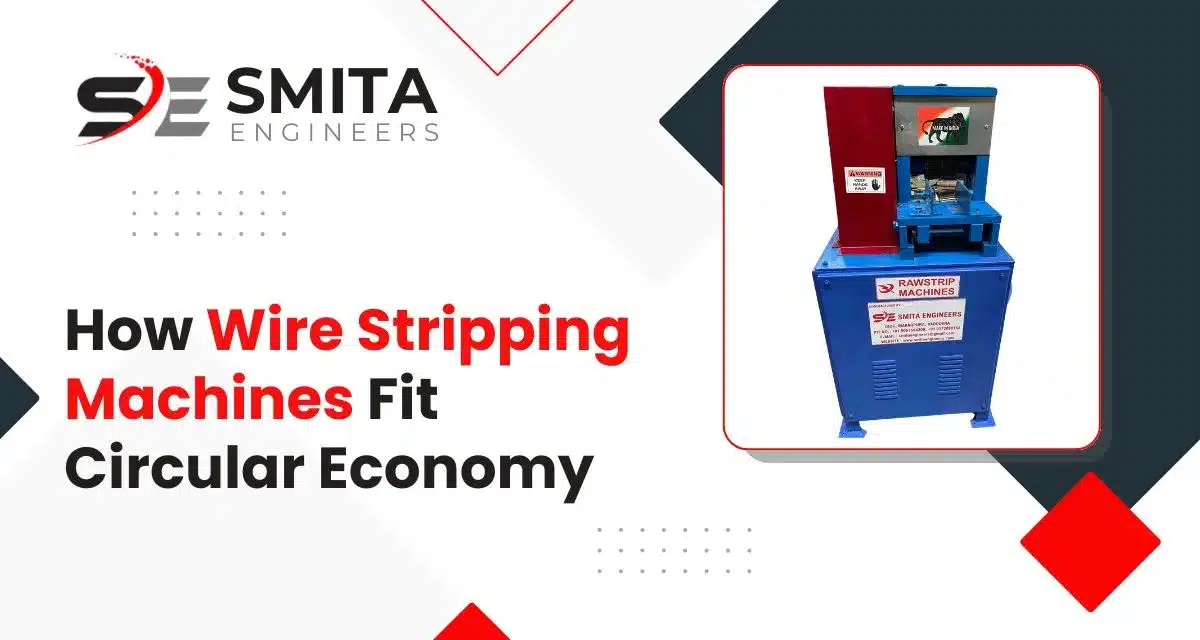
In a world striving for sustainability, closed-loop systems and resource recovery are more than buzzwords—they’re necessities. One technology quietly playing a key role is the wire stripping machine. These machines peel insulation off discarded wires so that valuable metals like copper and aluminum can be reclaimed instead of going to landfill. According to industry sources, wire stripping machines support matesssrial reuse and waste reduction, aligning closely with circular economy principles.
What Is the Circular Economy?
The circular economy is a model where materials are kept in use for as long as possible, waste is minimized, and value is retained in products and materials through reuse, repair, remanufacture, and recycling. Compared with the traditional linear “take-make-dispose” model, the circular approach emphasizes resource efficiency, material recovery and regeneration.
Role of Wire Stripping Machines in Circular Systems
1. Enabling Material Recovery
Wire stripping machines allow scrap wires—often containing copper or aluminum—to be processed so the insulation is removed and the metals recovered. This contributes to reducing the demand for virgin raw materials and turning previously discarded wires back into usable inputs. For example:
- A report highlights that wire stripping machines “improve the recovery rates of copper and aluminium … reduce the need for mining raw materials.”
- Market research says that cable‐reclaiming via stripping machines is a visible application niche in advanced markets, driven by circular economy and e-waste regulation.
2. Diverting Waste from Landfill
By processing waste wires instead of sending them to landfill or incineration, stripping machines help prevent the loss of embedded value and reduce environmental damage from disposal and raw‐material extraction. As one article states: “These machines … help divert waste from landfills, promoting a circular economy where materials are reused rather than discarded.”
3. Supporting Down-Stream Recycling Ecosystems
Recovered metals from stripping machines feed into smelting, re-manufacturing, or alloy production operations. The ability to feed clean copper or aluminium into recycled material streams supports industries that rely on secondary materials. This improves the economics and viability of recycling. Market analysis shows that “waste cable recycling accounts for 15-20% of demand” in advanced markets for stripping equipment, indicating its relevance to circular supply chains.
Benefits for Manufacturers and Recyclers
- Resource efficiency: The metal value inside scrap wires is unlocked rather than lost.
- Cost savings: Recovered metals reduce dependence on raw ore extraction, which often has higher energy and environmental cost.
- Regulatory alignment: Many jurisdictions are tightening e-waste and scrap metal regulations; using stripping machines supports compliance.
- Sustainability credentials: Companies employing such recycling technologies can boost their environmental credentials and meet stakeholder demands for circularity.
Best Practices to Maximise Circular Economy Impact
- Select the right machine for throughput and wire size range – Stripping machines vary in capacity and size range (e.g., 1.5mm–40mm diameter cables, 500–800 kg/day capacity) so matching your scrap profile is key.
- Ensure effective separation & purity of output – Insulation removal must preserve the metal integrity so it has high recycling value.
- Use energy‐efficient equipment – Newer machine models emphasise lower energy consumption and automation, which lowers environmental impact and operating cost.
- Integrate with downstream recycling systems – Stripping is one step; subsequent sorting, granulation or refining of the recovered metal must be connected to capture full value.
- Maintain inspection and maintenance regimes – Consistent operation and minimal downtime ensures that recycling capacity remains efficient and reliable.
- Track and document material flows – For circular economy reporting and compliance, documenting how much metal is recovered, reprocessed and re-used is important.
Ready to make your recycling process smarter and more sustainable? Contact us for high-performance wire stripping machines designed to maximize metal recovery and support your circular economy goals.
Challenges and Considerations
- Up-front investment in equipment can be significant; firms must assess ROI based on scrap volume and metal value.
- Machine selection must align to wire types, diameters, insulation types and scrap source variability.
- Collection and aggregation of wire scrap are often overlooked: circular systems require efficient supply of feedstock.
- Quality of recovered metal matters; contamination from insulation or coatings reduces value.
- Need for broader infrastructure: stripping machines alone are not enough unless downstream refining/recycling operations are in place.
Future Trends & Opportunities
- Automation and digitalisation: Smart stripping machines with IoT sensors, automated feeding, monitoring of blade wear and predictive maintenance are emerging. This increases uptime and lowers cost of operation.
- Expansion into e-waste and complex cables: As the complexity of wiring in electrification, renewables and electronics grows, machines capable of handling multi-core or high‐insulation wires will become more important.
- Integration into circular supply chain platforms: Companies may form partnerships with recyclers, material brokers and manufacturers to create closed loops where recovered wire metal goes back into manufacturing.
- Policy incentives: Governments pushing for increased recycled content in products and stricter waste-handling rules will drive demand.
Frequently Asked Questions
How do wire stripping machines contribute to the circular economy?
They enable efficient recovery of valuable metals like copper and aluminum from scrap wires, reducing waste and promoting resource reuse.
Why is wire stripping important for recycling industries?
It ensures clean separation of metals from insulation, improving recycling efficiency and metal purity for remanufacturing.
Can wire stripping machines handle different wire types?
Yes, advanced machines can process cables of various diameters, insulation materials, and copper or aluminum cores.
What environmental benefits do wire stripping machines offer?
They reduce landfill waste, cut energy consumption linked to mining, and lower carbon emissions through metal reuse.
Are wire stripping machines suitable for e-waste recycling?
Absolutely. They play a key role in processing electrical and electronic waste, helping recover metals for reuse in new products.
Conclusion
Wire stripping machines are more than just industrial equipment—they are enablers of the circular economy. By extracting valuable metals from discarded wires, diverting waste from landfill, and supplying resources back into manufacturing, they help close material loops and reduce environmental impact. For organisations seeking to bolster sustainability while improving resource efficiency, investing in wire stripping and recycling capability offers a smart, forward-looking move.
Related Posts