Exporting industrial machinery requires proper planning, documentation, compliance, and logistics coordination. The global demand for…
As industries evolve and automation becomes the norm, the safety of operators and reliability of processes have grown in importance. In the world of wire stripping machines — whether for cable recycling, EV wiring harness production, or general wire-processing — modern safety technologies significantly reduce risk while improving output quality. At Smita Engineers, integrating advanced safety features is not just about compliance — it’s about delivering safer, smarter, and more efficient machines for our customers.
Key Safety Features in Modern Wire Stripping Machines
1. Enclosed Guards & Machine Guarding
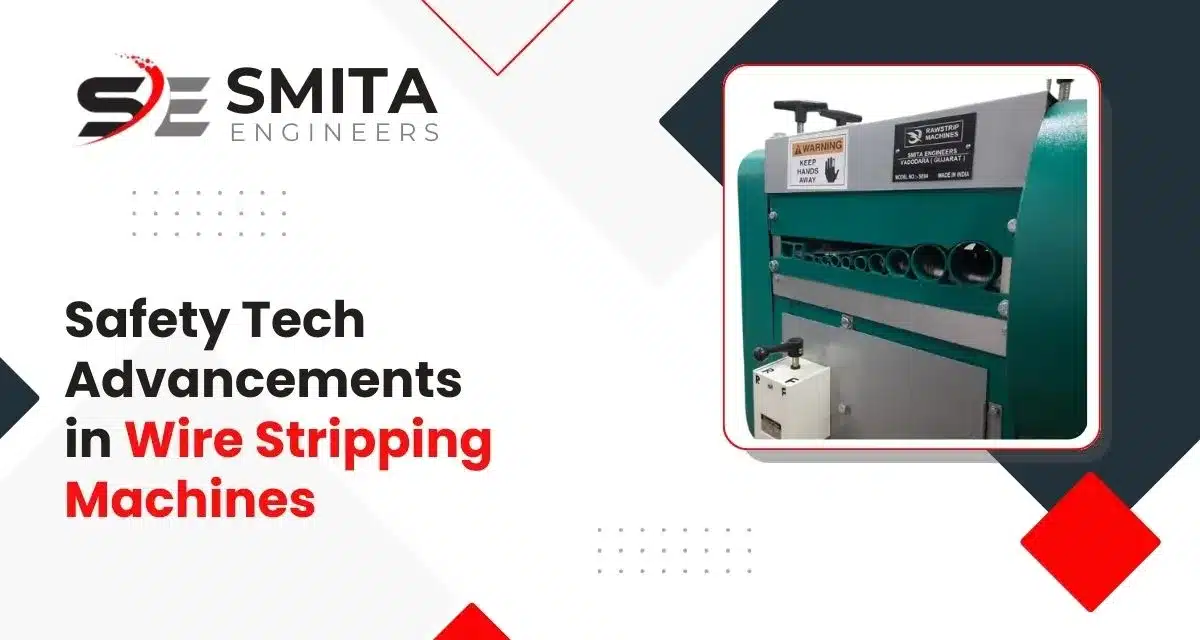
One of the foundational safety improvements is the use of proper guarding around all moving parts — rollers, blades, cutters, and feed mechanisms. These fixed shields or barriers prevent accidental contact with hazardous parts, whether during normal operation or maintenance. Machine guarding is widely recognized in industrial safety standards as key to preventing injuries.
By enclosing feed rollers and cutting areas, guarding ensures operators cannot slip fingers or tools into danger zones, especially when cables are being fed or discharged.
2. Emergency Stop & Safety Interlocks
Modern machines from Smita Engineers come with emergency-stop switches and safety interlocks. In case of a malfunction — jam, unexpected load, or blade obstruction — the operator can instantly stop the machine. Some models also prevent restart unless a guard cover is properly closed, ensuring the machine never runs when accessible hazard zones are exposed.
This ensures that during maintenance, blade change, or troubleshooting, operators remain protected from accidental start-ups.
3. Automated Wire Feeding & Controlled Blade Depth (Minimizing Human Contact)
Automated wire feeding systems and programmable stripping depth mechanisms reduce direct human interaction with blades and cutters. Because wires are drawn and processed automatically, the chances of accidental blade contact or manual errors decrease drastically.
Additionally, depth control ensures the stripping blade only removes insulation — not nick or damage the conductor — which enhances safety (less risk of short circuits) and quality (less internal damage).
4. Safe Handling of Recycled & Scrap Wires
For machines used in recycling or scrap-cable processing, extra safety protocols are essential because of wire irregularities or damaged insulation. Modern wire stripping machines are designed to handle such cables safely — with strong guarding, stable feed rollers, adjustable clamping force — minimizing the risk of wire whipping, sparks, or unexpected conductor exposure.
Why Safety Tech Matters: Risks, Realities, and Rewards
- Lacerations / Finger Injuries — Exposed blades or rollers can cause deep cuts.
- Cable Whip / Ejection Hazards — Poor clamping or unguarded output rollers can fling stripped insulation or wire ends, risking eye or hand injuries.
- Electrical or Fire Hazards — Improper stripping of insulation, especially for high-voltage cables or faulty scrap wires, can expose conductors, leading to shocks or sparks if not handled carefully.
- Operator Fatigue / Repetitive Strain — Manual stripping without automation can lead to fatigue or strain injuries over time.
Want safer and smarter wire stripping solutions? Smita Engineers offers high-precision, safety-driven machines for modern production — Contact us to get started.
Benefits of Advanced Safety Tech
- Consistent Protection: Guarding and interlocks provide a first line of defense, reducing operator injury risk.
- Reduced Scrap and Damage: Controlled blade depth and automated feeding minimize conductor damage, improving yield and reducing rework.
- Higher Productivity with Safety: Automation enables high throughput without sacrificing safety — operators don’t need to intervene constantly.
- Compliance & Confidence: With built-in safety features, machines are better aligned with safety standards and workplace regulations, providing assurance to clients and operators.
Smita Engineers’ Approach: Building Safety into Every Machine
At Smita Engineers, safety is a core design principle — not an afterthought. Our wire stripping machines are engineered with:
- Robust fixed guards and safety shielding for feed and discharge zones.
- Easily accessible emergency-stop switches and safety interlocks that disable operation when guards are opened.
- Automated feeding and adjustable strip settings to avoid manual interaction with blades.
- Durable build quality to handle even scrap and recycled cables safely.
- Clear user manuals and training guidelines to ensure safe operation and maintenance by clients.
Recommended Best Practices for Operators
Even with advanced safety features, safe operation depends on proper handling and discipline. We advise that operators always:
- Use appropriate personal protective equipment (gloves, eye protection), especially when handling scrap cable ends.
- Never bypass or remove safety guards or interlocks.
- Check cable diameter and insulation type before stripping; avoid overloading the machine.
- Perform routine maintenance: clean rollers/blades, check guard integrity, and ensure proper tension and blade adjustment.
- Keep the work area dry, clean, and free of clutter to avoid accidental slips or misfeeds.
The Road Ahead: Evolving Safety with Smart Manufacturing
With continuing advancements in industrial safety and automation, future wire stripping machines are likely to integrate even more sophisticated safety technologies:
- Sensor-based human detection — to automatically halt machine if a human approaches hazardous zones.
- Smart error detection — automatic detection of cable anomalies, wrong diameter, or stripped-end faults, preventing defective outputs.
- Integration with Industry 4.0 / Operator Alerts — real-time monitoring, alert systems, and maintenance scheduling to reduce downtime and prevent accidents.
At Smita Engineers, we are committed to staying ahead with these developments — designing stripper machines that not only deliver performance but prioritize operator safety and reliability.
Frequently Asked Questions
Why are safety features essential in wire stripping machines?
Because stripping machines have sharp blades, rollers, and moving parts — without proper safety features (guards, interlocks, emergency-stop), operators risk serious injuries such as cuts, lacerations, or crush injuries.
What safety features should a modern wire stripping machine have?
A safe, modern machine should include fixed guards or interlocking shields, clearly marked controls, an emergency-stop mechanism, proper enclosure of cutting and feed zones, and reliable guarding to prevent accidental contact with moving parts.
How does automation improve safety compared to manual wire stripping?
Automated wire stripping reduces manual handling of wires and blades. Because feeding, cutting, and stripping are machine-controlled, the risk of operator contact with blades or rollers drops significantly, reducing cut injuries and repetitive-strain hazards.
Are there special risks when processing scrap or recycled wires?
Yes. Scrap or recycled wires may have damaged insulation, exposed conductors, or irregular shapes — increasing the danger of blade slips, conductor exposure, or wire ejection. Machines must have robust guarding, stable feed mechanisms, and proper handling protocols to process such cables safely.
What personal protective equipment (PPE) should operators use when working with these machines?
Operators should use cut-resistant gloves, safety glasses (or face shields), insulated footwear, and avoid loose clothing or accessories to prevent entanglement. PPE is critical especially when handling stripped wires or scrap.
Conclusion
Safety is not optional — it is fundamental. Modern wire stripping machines equipped with enclosed guarding, emergency stop systems, automated feeding, and controlled stripping mechanisms significantly reduce risks of injury, cable damage, and process faults. For manufacturers handling wiring, recycling, or EV harness production, investing in safety-enhanced machines ensures not just higher productivity but long-term reliability, compliance, and operator well-being.
Related Posts