Exporting industrial machinery requires proper planning, documentation, compliance, and logistics coordination. The global demand for…
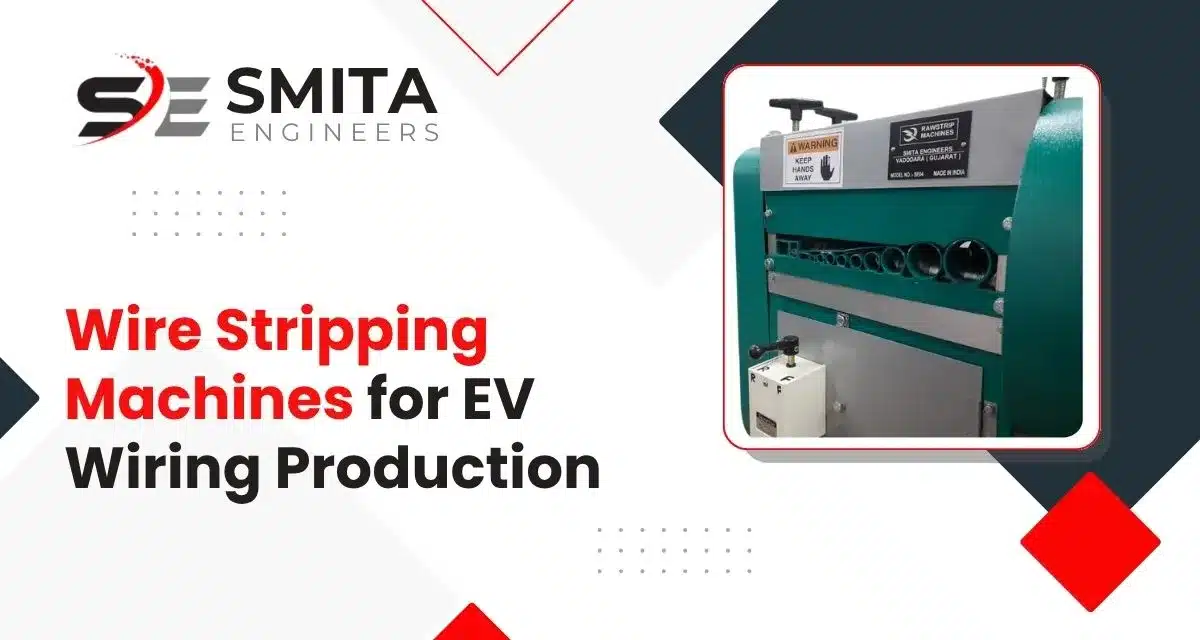
As the electric vehicle (EV) market explodes, the demand for reliable, high-precision wiring harnesses has surged. EV harnesses — which carry high voltages, power signals, and data — require rigorous manufacturing processes. Among these, wire stripping machines play a critical role: preparing wires for termination, crimping, or soldering while ensuring consistent quality, operational efficiency, and safety.
Why Wire Stripping Matters in EV Harness Manufacturing?
Here are the primary reasons why specialized wire-stripping machines are essential for EV wiring production:
- High-Voltage & Thick Conductors
EVs often use thick, large-gauge cables (e.g., up to 120 mm² or more) for battery packs and power delivery. Specialized stripping machines can handle these safely and accurately. For example, some machines like the STA-AD120 support high-voltage cables up to 120 mm². - Precision & Clean Cuts
Good stripping machines provide burr-free cuts and very precise insulation removal. - Speed & Throughput
Automation ensures high throughput. For example, large wire cut-strip machines like PRV-CS-240 can process cables up to 240 mm² at very high speeds. - Labor & Cost Efficiency
By automating the stripping process, manufacturers reduce manual labor, minimize errors, and improve repeatability. This translates to lower costs and higher yields. - Safety & Quality Control
For EV wiring, poor stripping can cause conductor damage, which might lead to reliability or safety issues later. Using servo-driven, precisely controlled stripping machines helps maintain consistent insulation removal without nicking the conductors.
Types of Wire Stripping Machines Used in EV Wiring
Here are some common categories of stripping machines used in EV harness production, along with their typical features:
| Machine Type | Use Case in EV Wiring | Key Features |
| High-Voltage Cut & Strip Machines | Big-gauge EV power cables (like battery or HV busbars) | Belt feeding, multi-wheel drive, program storage, high precision |
| Coaxial & Multi-layer Strippers | Shielded or multi-layer EV communication / charging cables | Rotary blades, up to 9 stripping layers, program memory, touch screen interface |
| Heavy Cable Cut & Strip Machines | Thick trunk cables or battery interconnects | 8-wheel drive, servo motors, ±0.1 mm accuracy, high throughput |
| Compact Automatic Strippers | Hook-up wires, internal EV electronics | Support for smaller diameters (e.g., 1.2 mm to 3.5 mm), dual-wire processing, motor-driven |
Key Technical Features to Consider
When selecting a stripping machine for EV wiring production, here are the technical specs and considerations that matter most:
- Conductor Size & Cross-Section: Ensure the machine supports the cable gauge used (e.g., 10 mm², 120 mm², etc.).
- Stripping Length and Depth: Ability to set front-end / rear-end strip length, half-strip or full strip. Some machines can strip both ends or even do “necking.”
- Drive Mechanism: Belt-feeding systems help avoid damaging insulation for delicate or thick wires.
- Precision & Accuracy: High-precision motion control (servo, ball screws) helps maintain consistent cuts.
- Program Storage: The ability to store multiple programs (e.g., 100+), so different wire types or processes can be switched quickly.
- User Interface: Touchscreens for ease of use, language support, error handling, diagnostics.
- Safety Features: Transparent covers, proper clamping force control, and programmatic control to prevent conductor damage.
- Integration: Ability to integrate with pre-feeders, coilers, or downstream machines like crimpers.
Looking for high-precision wire stripping machines for EV wiring production? Get in touch today to streamline your EV harness manufacturing with automation and accuracy.
Benefits of Automation in EV Harness Lines
- Scalability: Automating stripping allows EV wiring lines to scale rapidly without proportionally increasing labor cost.
- Consistency: Machine-driven processes produce uniform strips every time, which is critical for downstream crimping or soldering.
- Reduced Scrap: Accurate stripping minimizes conductor damage, reducing rework or scrap.
- Safety: Well-stripped wires reduce risk of insulation failure, short-circuiting, or reliability issues in high-voltage systems.
Challenges & Considerations
While wire stripping machines bring many advantages, manufacturers should be mindful of:
- Initial CapEx: High-precision, high-capacity stripping machines are expensive; ROI must be evaluated.
- Programming & Setup: Creating and validating programs for many wire types (different lengths, insulation types) takes time.
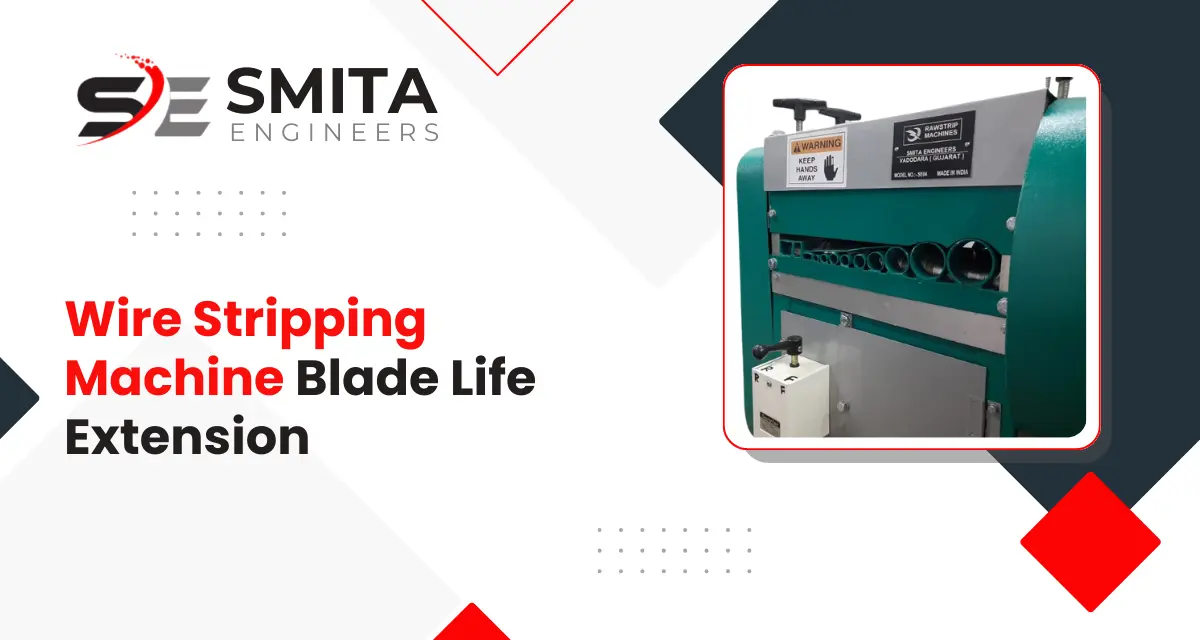
- Maintenance: Blades (especially tungsten steel) wear out; regular maintenance needed.
- Operator Training: Staff need training in programming, handling faults, changing tooling, and safety procedures.
- Floor Layout: Integrating stripping machines into the harness production line requires careful planning (feeders, coilers, conveyors).
Emerging Trends
- Increasing Automation: As EV production scales, more wire processing will move to fully automated lines.
- Smart Machines: More machines will include diagnostics, predictive maintenance (through sensors), and integration with MES/Industry 4.0 systems.
- Higher Gauge Processing: With EVs pushing for higher power and faster charging, stripping machines will need to handle even larger conductors.
- Sustainability: Efficient wire processing contributes to lower waste, aligning with EV makers’ goals of greener manufacturing.
Frequently Asked Questions
Why are wire stripping machines important in EV wiring production?
Wire stripping machines ensure accurate insulation removal without damaging conductors, which is critical for high-voltage EV wiring safety and performance. Precision wire preparation directly affects crimp integrity and harness reliability.
What types of wires are used in EV harnesses?
EVs use a mix of high-voltage cables (up to 600–1000V), shielded communication cables, battery cables, and control wires, requiring different stripping capabilities.
Can wire stripping machines handle high-voltage EV cables?
Yes. Modern HV cut-and-strip machines can process cables up to 120–240 mm² using servo-driven systems and belt feeding to prevent insulation damage.
Do wire stripping machines support multi-layer or shielded cables?
Coaxial and multi-layer strippers are designed for EV communication cables with multiple insulation layers, shielding, and jackets. They can strip each layer with programmable depth control.
Conclusion
Wire stripping machines are a foundational component in EV wiring harness production. They enable the safe, precise, and efficient preparation of conductors — especially critical for high-voltage systems. As the EV industry continues to grow, selecting the right stripping machine (in terms of capacity, precision, and automation) is key to building scalable, cost-effective, and high-quality harness lines.
If you’re planning to set up or scale an EV wiring production facility, investing in the right wire stripping technology now can pay off greatly in throughput, consistency, and long-term reliability.
Related Posts