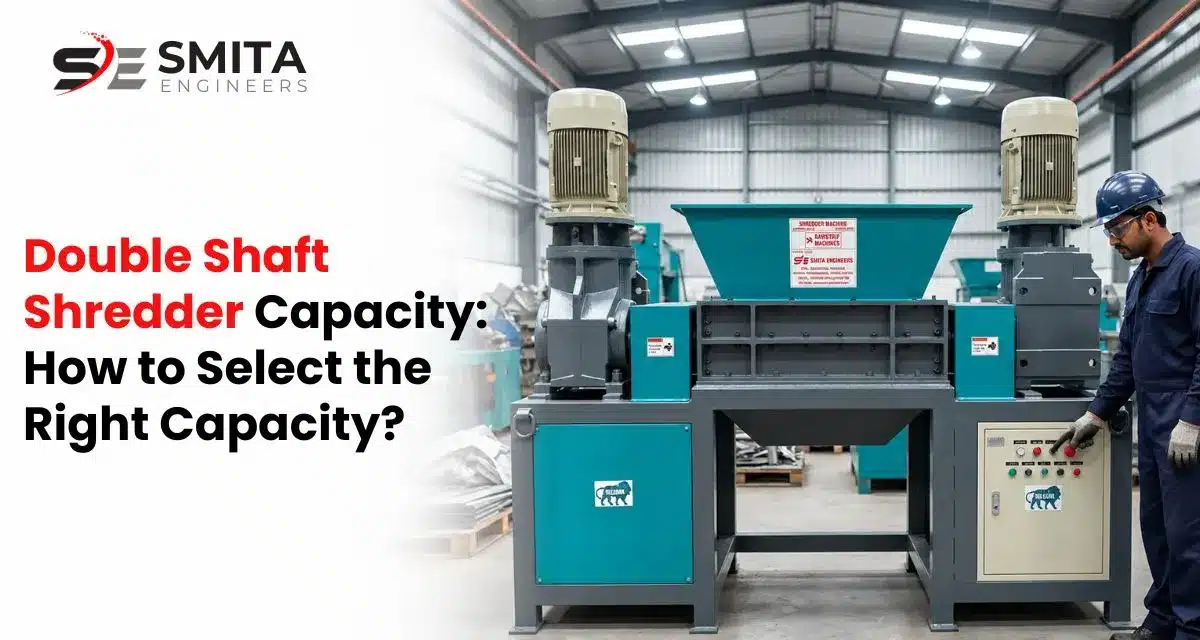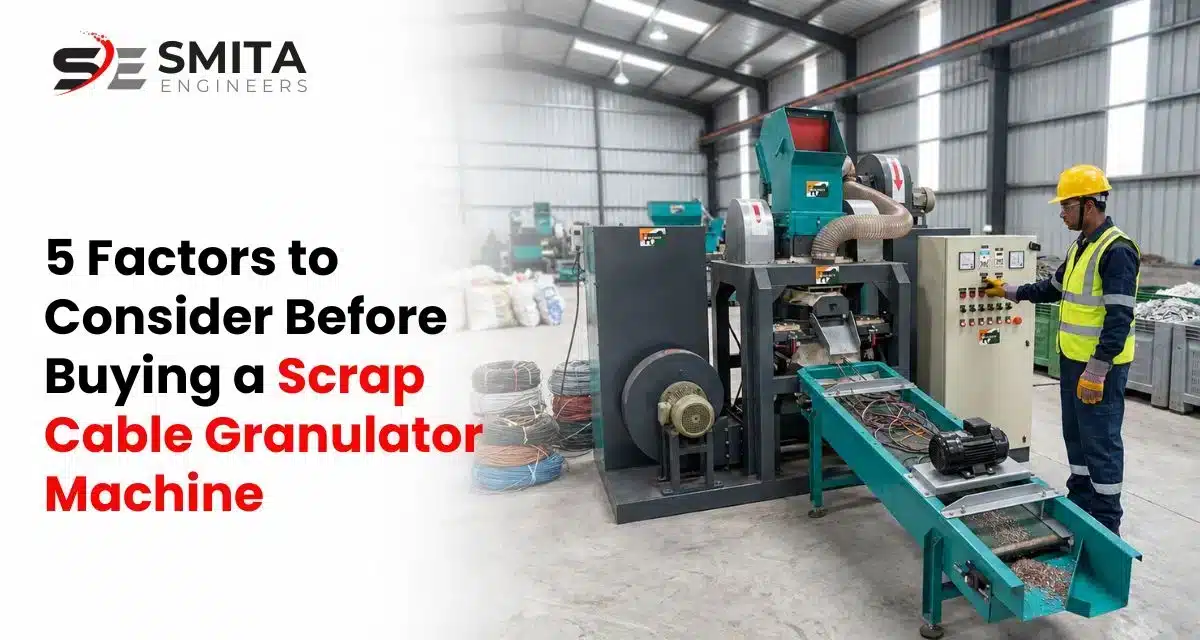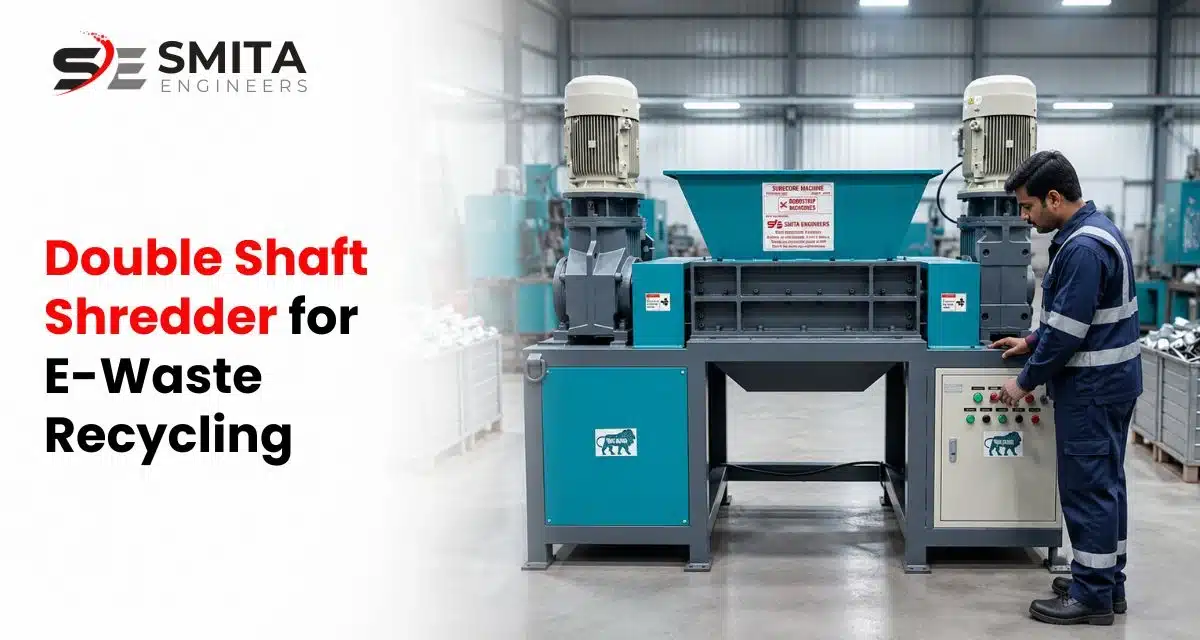
Choosing the right capacity is one of the most important decisions when purchasing a Double…
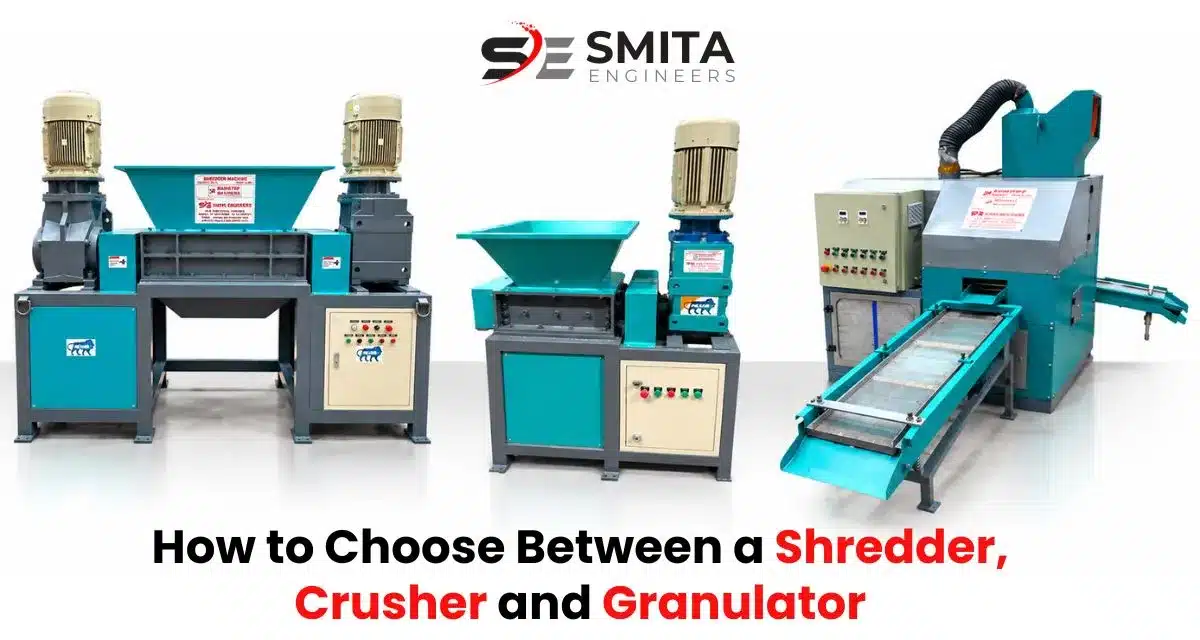
Choosing the right size-reduction equipment can make a major difference in scrap processing. A Shredder, Crusher and Granulator may all reduce material size, but they work differently and are suited to different processing requirements.
The right choice depends on the material, its size, the required output, processing volume, and what you plan to do with the material afterward.
1. When Should You Choose a Shredder?
A shredder is generally used when the incoming material is bulky, irregular, or difficult to process directly. Its primary purpose is to break larger materials into smaller, more manageable pieces.
A shredder machine can be useful for materials such as plastic, rubber, paper, wood, and certain scrap materials. Double shaft shredders are particularly useful where controlled size reduction and continuous material feeding are required.
If your main requirement is to handle bulky scrap before further processing, shredding can be a practical first step.
2. When Is a Crusher More Suitable?
A crusher is typically selected when the material needs to be broken down through crushing rather than tearing or cutting.
A crusher machine may be suitable when the incoming material is relatively rigid and the objective is to reduce it into smaller pieces for subsequent handling or processing.
Before choosing a crusher, consider the material’s hardness, size, required output, and expected processing volume. These factors can help determine whether crushing is more appropriate than shredding or granulation.
3. When Should You Use a Granulator?
Granulators are generally used when a more controlled and relatively smaller output is required. They cut material into smaller particles and are commonly used for applications where consistent particle size is important.
A granulator machine can be suitable for materials such as cable scrap and certain plastics, depending on its design. In cable processing, granulation can be combined with separation to recover valuable metal from insulation.
If your application requires smaller and more consistent particles rather than simply breaking bulky material down, granulation may be more appropriate.
4. Compare the Machines Based on Your Application
There is no single machine that is suitable for every size-reduction application. A scrap processing machine should be selected according to the material and the final result you need.
| Equipment | Main Purpose | Typical Requirement |
| Shredder | Breaks bulky or irregular material into smaller pieces | Initial size reduction |
| Crusher | Crushes suitable rigid materials | Controlled crushing |
| Granulator | Cuts material into smaller, more consistent particles | Fine or controlled size reduction |
The required output size, material characteristics, processing capacity, and downstream process should all be considered before making a decision.
5. Consider the Required Output Size
The final size you need is an important factor when choosing between different processing machines. A granulator machine may be more suitable when the material needs to be reduced into smaller and more uniform particles, while a shredder can be used when larger pieces are acceptable.
For some applications, the material may need to pass through more than one processing stage to achieve the desired result. Understanding the required output size before purchasing helps you select equipment that fits your actual workflow.
This approach also prevents investing in a machine that cannot deliver the particle size or processing result your operation requires.
Need help choosing the right size-reduction equipment? Contact Us to discuss your material and processing requirements.
Choose Based on Material and Output
Choosing between a shredder, crusher and granulator depend on what you need to process and the result you want from the machine. Rather than choosing based only on the equipment name, consider the material type, required output size, processing volume, and operating conditions.
If the material needs an additional size-reduction stage, the overall processing flow should also be considered. Looking at these factors together makes it easier to select equipment that suits your actual application.
Frequently Asked Questions
What is the main difference between a shredder, crusher and granulator?
A shredder is commonly used for initial size reduction of bulky material, a crusher breaks suitable rigid material through crushing, while a granulator produces smaller and more controlled particles.
Is a shredder better than a granulator?
Neither is universally better. The appropriate machine depends on the material, required output size, processing volume, and intended application.
Can a shredder and granulator be used together?
Yes. In some processing applications, shredding is used as an initial size-reduction stage before further granulation or processing.
What factors should I consider before choosing a crusher?
Consider material type, hardness, input size, desired output size, processing capacity, and the requirements of the downstream process.
Which machine is suitable for cable scrap?
The choice depends on the type and size of cable scrap and the required output. Granulation is commonly considered when smaller particles and metal-insulation separation are required.
Conclusion
A Shredder, Crusher and Granulator each serve different size-reduction purposes. Shredders are useful for bulky material, crushers are designed for suitable crushing applications, and granulators are used when smaller, more controlled particles are required.
Understanding your material and final processing requirement is the best starting point for selecting the right equipment.
Related Posts